
The real estate market in Phuket in 2026 remains one of the most outstanding markets in Thailand, particularly in the holiday home and luxury condominium segments, which continue to be driven by strong demand from foreign buyers.
However, as the market enters the “low season” (approximately May–October), when tourist numbers decline due to seasonal factors, a key question arises:
How much is the property market affected, and what direction is it heading?
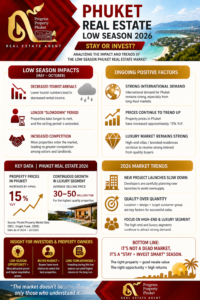
Impact of the Low Season on Phuket Real Estate
1. Rental Market is Directly Affected
Phuket’s real estate is closely tied to the tourism sector, especially short-term rental properties such as condominiums and pool villas.
- During the low season, occupancy rates decline, leading to a slowdown in rental yields
- Rental income is highly seasonal, peaking in the high season and dropping during the low season
👉 Therefore, investors focusing on rental income feel the impact the most during this period.
2. Sales “Slow Down” but Do Not Drop
Although the market atmosphere becomes quieter, demand does not disappear.
- In 2026, the market is in a rebalancing phase, with buyers taking more time to make decisions
- Demand in Phuket continues to grow, with Q1 2026 increasing by approximately 32% QoQ
👉 This means deals are still happening, but they take longer to close.
3. Shift in Buyer Behavior
During the low season:
- Buyers have stronger negotiating power
- Developers offer more promotions (discounts, guaranteed returns)
- Buyers focus more on value rather than urgency
Market Trends in Phuket During the Low Season
1. Strong Support from Foreign Demand
One of Phuket’s key strengths:
- Foreign buyers remain the main driving force
- Especially high-net-worth individuals who are less affected by economic fluctuations
👉 This keeps the market from experiencing a sharp decline.
2. New Supply is Slowing Down
- New project launches are expected to decrease in 2026
- Developers are focusing more on clearing existing inventory
👉 This is positive in the mid-term, as it helps reduce oversupply.
3. High-End Market Remains Strong
- Luxury homes, pool villas, and branded residences continue to dominate
- Properties priced at 30–50 million THB remain highly competitive, especially in beachside locations
👉 The low season has minimal impact on this segment.
4. A More “Selective Market”
The 2026 market is not growing across the board, but rather:
- Growth depends on location + product + target market
- Projects that do not match demand will face slower sales
Conclusion: Low Season = Market Consolidation, Not Decline
Overall:
❌ This is not a market downturn
✅ It is a period of slowdown and quality selection
The Phuket real estate market during the low season can be seen as a “breathing period” rather than a decline, supported by:
- Long-term tourism growth
- Continued foreign investment
- A resilient luxury segment